The Crisis
The wave is now.
Bali's main landfill is closing in 2026 — and the replacement isn't built. The visible result is already here: a surge in illegal dumping and open burning across the island.
What's happening
For decades, four regencies — Denpasar, Badung, Gianyar, and Tabanan — sent their waste to one place: the Suwung landfill. 32.4 hectares, piled up to 35 metres high.
Now it's closing. Organic waste was banned there from 1 April 2026, and full closure follows the same year. The waste-to-energy plant meant to replace it isn't expected until 2027 at the earliest — and it's contested.
That gap doesn't pause the trash. It gets burned in backyards and dumped in rivers instead.
<5%
of Bali's plastic waste is recycled
~65%
of Bali's waste is organic
4 regencies
relied on the Suwung landfill (Denpasar, Badung, Gianyar, Tabanan), now closing
32.4 ha
Suwung landfill size, up to 35m high
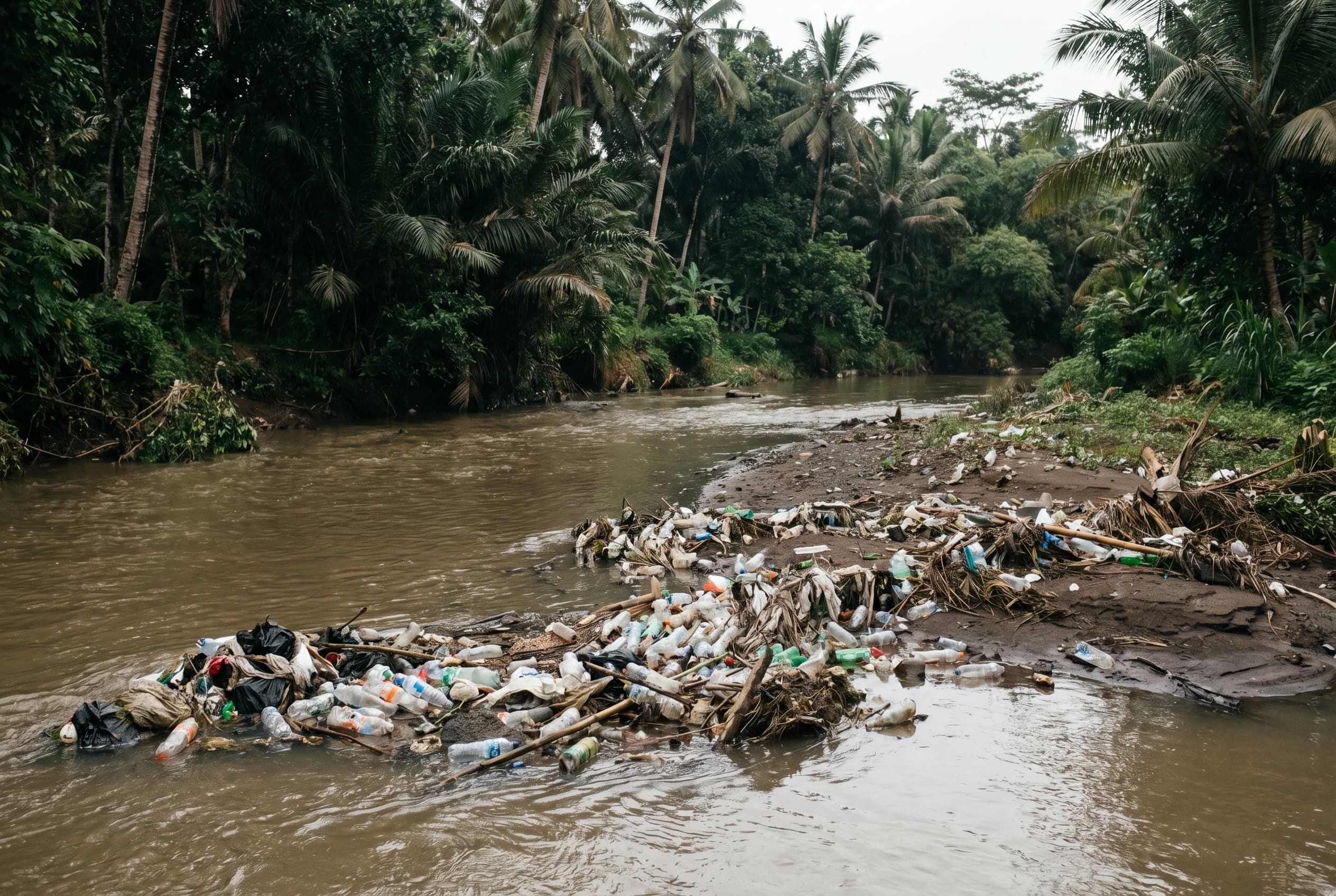

Illustrative imagery — representative of conditions reported across Bali. To be replaced with sourced, credited photography before launch.
What Bali throws away
Two-thirds of it is organic — and that's the part the landfill just stopped taking.
Indicative composition for Bali municipal waste; organic share per The Bali Sun (Apr 2026). Refine against the latest DLHK figures before launch.
- Organic65%
- Plastic15%
- Paper & card9%
- Glass, metal & other11%
Where it goes now
With nowhere to put it, the gap fills itself.
The same waste still arrives every day. Without a landfill, most of it is burned or dumped — and only a sliver is recycled.
100%
Waste
collected
collected
- Burned in the open~35%
- Dumped illegally / into rivers~33%
- Landfilled~27%
- Recycled~5%
Where Bali's collected waste actually ends up. With Suwung closing and no replacement online, the 'landfilled' share collapses into dumping and burning.
What's at stake
The same coastline, two futures.
Drag to see it: a funded, cared-for shore versus what happens when the trash has nowhere to go.
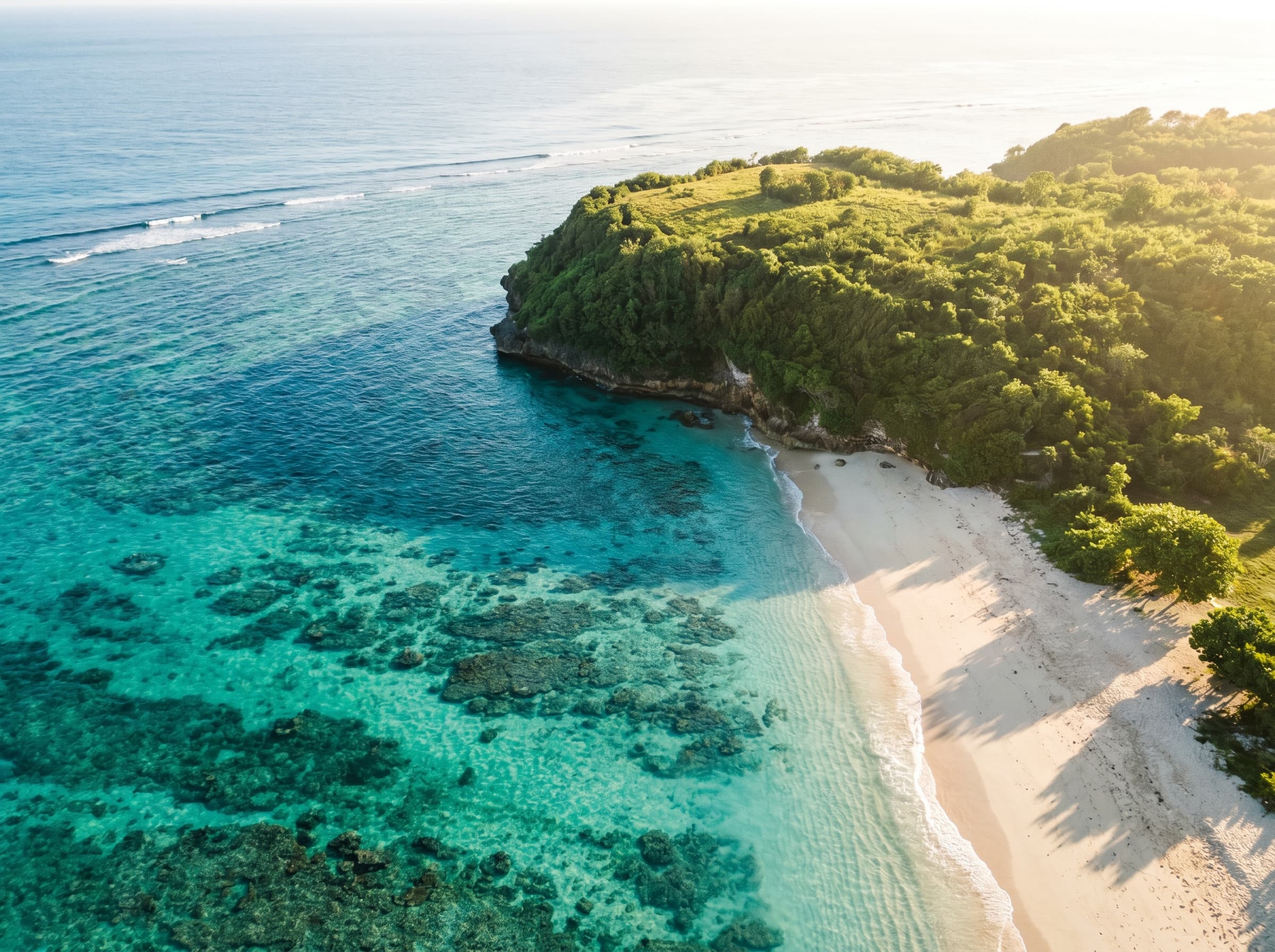 Pristine
 Without funding
Pollution imagery is illustrative, pending sourced/credited photography.
The timeline
A multi-year gap, starting now.
Each date below is a step the island is taking — and a window someone has to cover in between.
1 Apr 2026
Bali bans organic waste at the Suwung landfill
The island's largest disposal site stops accepting organic waste — roughly 65% of what Bali throws away — with no island-wide composting system ready to absorb it.
2026
Suwung landfill full closure; illegal dumping and open burning surge
Four regencies lose their primary disposal site. The visible result across the island is more roadside dumping, clogged rivers, and open burning.
~2027
Waste-to-energy plant targeted (contested on environmental grounds)
The planned replacement is years out and contested by environmental groups — leaving a multi-year gap that someone has to fill now.
This is fixable. It just needs funding, people, and proof.
That's exactly what Pristine is built to deliver — beautifully, and in public.